SPCA Blog Feature - Fostering and Bentley’s Story

Hello all! As you know from our blog intro, we are covering all kinds of topics from African Adventures to Veterinary Advice to SPCA stories! This is going to be a bit of an unorthodox SPCA entry, but very important as well!

I think it is quite safe to say that all who follow our page are animal lovers! So it then follows that many of you are going to be very willing to offer your aid for animals in need. I wanted to write a post about the SPCA that is very near and dear to my heart, and something I am truly passionate about! Fostering animals from the SPCA is our topic for the day!

I would like first to give a rundown of the SJARL /SJSPCA’s general qualifications for fostering, as well as give you some insight on why even the most caring, attentive people may be turned down for fostering.

Animals who require fostering are those who need special attention. Often foster animals are pregnant or nursing cats, sometimes with healthy babies, sometimes not; malnourished or sick puppies and kittens; animals with injuries; animals with behavioural needs; and other complicated situations. Of course no two cases are the same!  Occasionally it is just to keep them in a safer more secluded environment, as is often the case with healthy nursing kittens, but more often it is more complicated than that.  Each case requires a special sort of attention - fostering isn’t just taking an animal into your home. It often consists of:

·       Late night feedings

·       Helping orphaned puppies and kittens use the bathroom since their mother’s can’t

·       Bathing animals with certain conditions (sometimes a few times a week)

·       Helping an animal with physiotherapy after an injury repair

·       Long walks

·       Short walks

·       Vet visits

·       Feeding schedules

·       Constant supervision

I could go on forever about the different special needs some of these animals have, but I think you understand what I’m trying to convey.

There are general guidelines for fostering animals that just need extra attention, and then of course there are rules for those who have special needs. In order to foster an animal with minimal special needs, the SJARL/SJAPCA requires that you:

·       Are employed or able to financially take care of yourself (as costs for animals may come up)

·       Are willing to take the animal to a vet in an emergency

·       Own your house, or have permission from your landlord to have the animal in your residence

·       Have a place that the animal can be secluded from the rest of the house - having a brand new animal running freely in a large space is not generally a good idea from the start

·       Are willing and able to devote serious time and effort to helping the animal animal recover

·       Will not be leaving the animal alone for extended periods of time

·       Are able to be easily reached to give updates on the animal

There are so many amazing people who would love to foster animals but just don’t have the time, space or money. Those of you who cannot manage to foster, can always volunteer at the SPCA - dogs need walks and cats need loving!
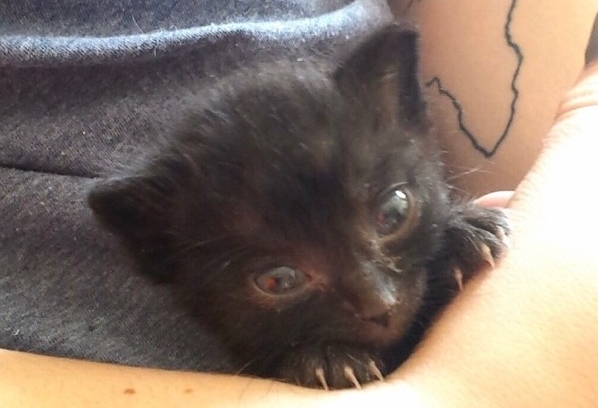
Sweet Bentley

Sweet Bentley

I want to end this post with a personal fostering story that also sums up why only certain people are selected to foster certain animals:

In the second week of March, Dr. Katie and I were at the SPCA doing our weekly FIV/FeLV testing on the kitties. There was a cat there who had recently given birth to 7 kittens - a huge litter! Two of the kittens had already died (with such a large litter this is common), and another one was on his way out and it was suggested that he get more specialized attention from the staff, or a foster. I said “I so wish I could foster him, I’d do it in a heartbeat.” To which Dr. Katie said - “DO IT, we can bring him with us in the car during work hours! It would be fun!” So one foster application form, a couple appointments and a couple hours later, I picked up this tiny orphaned kitten, later named Bentley, from one of the SPCA workers and took him home.

Luckily for me, I was used to the overnight feedings and “peeing” a kitten who isn’t able to use the bathroom himself. The first couple of nights were brutal and I was exhausted but so happy to be trying and feeling like I was giving this little guy a shot! Every two hours I was getting up to feed this guy:  through the night, between appointments in the car, anytime he cried as well - even if it wasn’t two hours since his last feeding. I watched him grow a little, fight a cold, play with my two kitties, give me some attitude, and then make a tiny paw print on my heart.

Maxin' and Relaxin'

Maxin' and Relaxin'

As wonderful as Bentley’s story sounds - I have to tell the ending. The worst part of fostering is knowing all along in the back of your mind that your animal likely didn’t have a chance on their own, and that’s why they were in need of special care. As much as I loved my little black kitten, I had to know the entire time I had him: his chances of survival were slim to none. A foster was his last chance. Over the last couple days I had Bentley, he began to decline rapidly. Dr. Katie did all she could to help him, but in the end there wasn’t anything that could have been done to save my little dude. This story has taken me a long time to write about, because it is still hard for me to talk about, but I know how important it is to reach out to others who may want to foster.

My first experience as a foster for domestic animals ended with the death of my foster kitten - through no fault of anyone but the world itself.

This will not deter me from fostering again. In fact, I may have recently made my first leap back into the world of fostering orphaned kittens…

I don’t want Bentley’s story to deter anyone else from fostering either. I am still looking on the bright side! He would have died in his cage overnight at the SPCA. I gave him two weeks of heat packs, big cat cuddles, warm formula, and a trip into the world. He lived the last two weeks of his life to the fullest and I cannot be more proud of that. I encourage anyone who thinks that they have it in them to give an animal a second chance to visit the SJARL/SJSPCA and fill out a foster application form. Inquire about fostering and how you can help an animal have a second shot at life. Please feel free to reach out to me through email or our Facebook page as well with any questions you may have, I would be more than glad to answer! Wish me luck with my next little baby!

All the love -

Megan

For more information on fostering, click on the SPCA Logo below:

Sleepy Baby <3 

Sleepy Baby <3 

Becoming A VA! (Vet Assistant)

Hola guys! I have a little bit of a personal one for you. Take a look into some of my background and see what put me on the path to being a VA! (To the coolest vet in town-no bias here at all) Hope you all enjoy and have a great weekend! (I know I kicked off my weekend right with the Seadogs winning game 5 of round 2!! GO DOGS GO!!) ALAS, you can continue reading and learn a little too much about me!

All the best!!

-Megan (The queen of exclamation marks)

Making the Decision to Become a Veterinary Assistant

I was not entirely sure how to start this, but I think that giving my background can give some insight on what made me decide to go into the veterinary field.

I grew up in the woods. From a very young age, I had a love for everything outdoors. Most importantly, I fell in love with animals. The animals that got my passion started were squirrels, chickadees, salamanders, and strangely enough, I loved ants and beetles. Growing up I had one pet: a cat. My family does a lot of traveling so we never had time for a dog or several pets.

I was always super interested in animals, and how we connect with them. I satiated my fascination with BBC, Discovery Channel, and National Geographic. Once in high school, I took a lot of courses like Biology and Environmental Sciences, which reinforced my love for animals and the great outdoors.

When the time came to go to University/College I had a pipe dream of going into Journalism. Fate intervened to say the least, and 3 years later (after many nights freaking out having no idea what I wanted, and my mother finally convincing me that I could make my love for animals a career) I enrolled in a Veterinary Assistant program. My course was a total of 53 weeks with a 9 week work placement.

I learned so much about the inner workings of vet clinics. I love love loved having several opportunities to work with breeders, shelters and boarding kennels in the area. My time at college taught me a lot about animals but definitely a lot more about myself.

Statistically, many students who take the course that I took do not continue on to work in clinics. This happens for a few reasons:

1.       Veterinary Assistant is a diploma that includes a lot of personal communication and office work. In my experience, many people who go into Vet Tech or Vet Assistant do it because they want to work with animals, not people. Personally I love the people aspect alongside the animal aspect. Working the front desk in a clinic is where I saw myself.

2.       In relation to the first point, with a Vet Assistant certification, you can get jobs for breeders, groomers, boarding kennels, and places of the like, where you are almost solely working on animals. In clinics, you are often more on the front desk.

3.       The weight it could potentially have. In class we spent a couple classes talking about how hard it is to be present for a euthanasia, or a surgery with a not ideal outcome. I knew that I was so invested in animals, that being present for a euthanasia would be something I could do. I knew it was for the best. I will always have the best interest of the animal in mind. (This is not to suggest that those who cannot bear to be present for a euthanasia are less invested, but to explain that this is something I realized I was capable of. Therefore I knew it would be important for me to pursue.)

If working with animals is your passion, and you love people who love their animals, I highly recommend becoming a Veterinary assistant or a Veterinary Technician. It is such a fulfilling position, and although it can occasionally be emotionally taxing, at the end of the day the positives outweigh the negatives.


SO you want to own a giant?!

So you want to own a giant!

Dog lovers come in all shapes and sizes, and lucky for us, so do dogs! If you are someone like me who LOVES the idea of having a dog the size of a miniature pony running around your house, I would like to offer you some insight into owning a beautiful, elegant, gangly, goofy giant!

The first thing I am going to scare you with is the cost of owning a giant (just kidding, kind of - I’m just testing you to see if you’re ready). Owning a giant breed dog can be more than doubly as expensive as owning a small breed dog. The more your dog weighs, the more it costs - in terms of food, prescriptions, some grooming, and (sorry in advance) cremation. For example, a larger dog could be on the same food as a medium or small breed dog (although that is not recommended), but would require a lot more food to get the nutrients required for its size. A better example would be in terms of prescriptions - a larger dog would need a larger dose of medication for it to have an effect on them, whereas a smaller dog would not require nearly as much medication. Taking on a larger dog will cost more to take care of at the groomer, some boarding facilities, dog walking businesses, apartment rentals that allow pets, and so much more. But it is not just because of some conspiracy against big dogs: have you ever tried to restrain a Great Dane who doesn’t want to have his nails trimmed? That should be all the explanation you will need!

The second point I am going to make relates somewhat to the cost factor: there are some common injuries and health problems that occur in large dogs more often than small dogs. Some of the most common injuries and illnesses you may see are: hip and/or elbow dysplasia, arthritis, spinal problems, heart problems and gastric torsion. Their size causes more strain on their hearts and joints. They can eat faster and larger amounts of food, which can cause gastric torsion (bloated stomach, which turns on its axis and cuts off blood supply). Although all you amazing pet owners out there love your fur babies unconditionally, and may not want the cost it may take to fix them should they fall ill to factor into your decision to have a certain breed, it is important to be aware of what you are walking into with a giant breed dog.

The third (and definitely most sad) thing I want to tell you about large dogs is their often shorter lifespan. It is a terrible and sad fact that not all dogs live the 15-year plus lifespan that we all want to see. Large dogs are not only highly prone to injury, but also as previously mentioned, they are prone to heart failure and weakness due to the strain it takes to pump blood throughout their bodies. The general rule of thumb is the larger the dog, the shorter its lifespan. There are those crazy stories you hear about of 11-year-old Great Danes and 10-year-old Irish Wolfhounds, but unfortunately this is not the common situation for these breeds.

Now all that being said, its time to talk about how INCREDIBLE these giant beauties are. I have been obsessed with the idea of having my own little herd of deer running through my house since I can remember. Giants are generally easy going, so sweet, give the best kisses and are great when you don’t have a pillow and need a comfy cuddler. They have hearts twice the size and love twice as much. They are inquisitive, and lets face it those giant mugs can make anyone melt. If owning a giant is on your list of things to do, I can guarantee it will be one of the greatest things in your life. However: if you are thinking of taking on a giant dog, please take into consideration the strain on, not only your heart, but also your wallet. Every dog deserves the best, and making an informed decision is the best way to insure that is what they get!

Tell us about, and show us, your love affair with your beautiful giant breed dog in the comments!

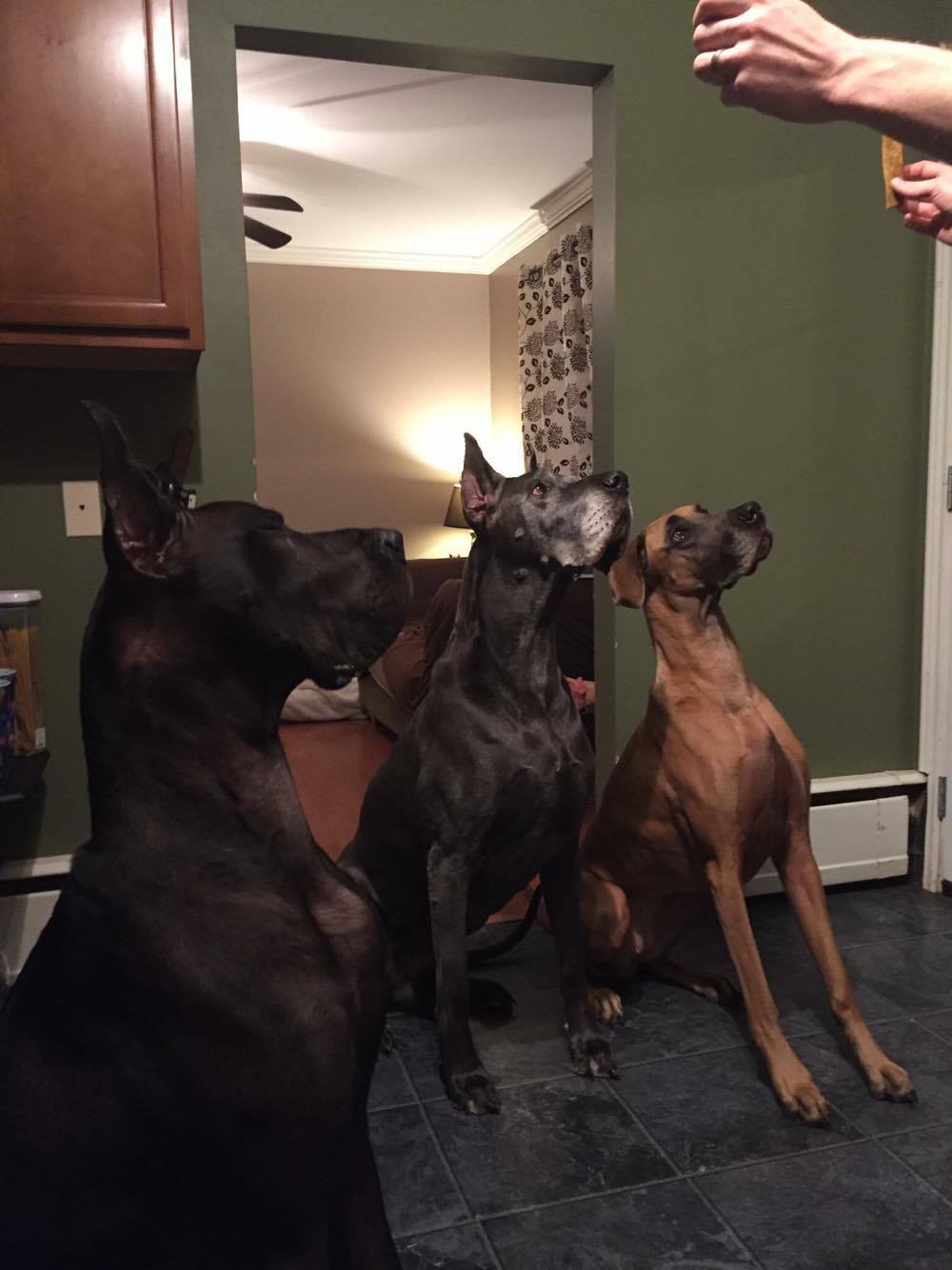
Check out one of our favorite packs of giants! The prettiest girls you'll ever see!

Check out one of our favorite packs of giants! The prettiest girls you'll ever see!

The Africa Series! -Intro to Africa!

Introduction to the Africa Series

In the Summer of 2016, I jetted off to Hoedspruit, South Africa for a 9 week work placement at Moholoholo Wildlife Rehabilitation Centre.

Africa had been a lifelong dream for me, and to have to opportunity to go was the greatest thing to happen in my life. This is part one of a “who knows how many” part series on my trip to Africa!

I flew into Johannesburg on August 13, took a 6 hour shuttle ride to Hoedspruit, and a 30 minute van ride to the Rehab. It was exactly like the movies: a fenced in property; zebras and antelope of all kinds roaming around; giraffes and monkeys walking beside the van; a mountain situated in the background, like some really poetic scene straight out of an Africa documentary.

When we arrived it was nearly dark. We got all situated in our bunks and were excited to discover that next to the bunks were lions, cheetahs and hyenas, all of whom are ambassadors. They were either human imprinted from cubs, or rescued at an age where they need constant care and cannot be released into the wild. A choice made every time an animal is brought into the rehabilitation centre is whether or not to euthanize, or raise them with human imprinting and condemn them to a life in a “camp” (A LARGE fenced in enclosure).

We made our rounds in the morning and saw several more exciting animals, including: two leopards, several honey badgers, serval cats, vultures, eagles, owls, and a ground hornbill who was full of personality. All of these animals were either orphaned at birth and brought in by civilians from automobile accidents, or found by rangers who discovered them poisoned. Some of the vultures and eagles had been caught in snares or hit telephone wires with their wings. It really drove home the impact we as humans have on the lives of these incredible animals.

Africa was an amazing experience and it taught me a lot about animals and people, and mostly about myself. It helped me form opinions on captive animals with first hand experience. I would love to see all animals roaming free, and that is Moholoholo’s goal. No perfectly healthy and wild animal is kept there for any reason.

Moholoholo Wildlife Rehabilitation Centre holds the belief that all animals are valuable, no matter how small or big, wild or tame. I watched them assign special cases like serval kittens, baby honey badgers, and 51 leopard tortoises to volunteers willing to take on the extra work. I personally had a few special cases to my name, which you will hear all about over the course of our blog!

Animals who are special cases are generally not shown to the public. They are the animals who require special attention, treatment, diets or enclosures. Some of the special cases are taken on by staff, however if it is a case that can be cared for by a student, they will assign someone willing to take on the extra work. Over my 9 week course at Moholoholo, I had a total of 10 special cases: 5 vultures, 2 honey badger babies, one serval kitten, one full-grown caracal, and one small bat. Skylar the serval kitten was one of the special cases I was lucky to have the chance to work with, and he was a handful!  He will be the first Special Case I tell you about, so stay tuned for his story in our next instalment of the Africa series!